If you’ve been scrolling through travel forums about Serbia and keep seeing references to crystal-clear mountain rivers, stunning gorge walks, and world-class trout fishing — chances are, the Rzav River is exactly what people are raving about. Winding through the legendary Zlatibor mountain region of Western Serbia, the Rzav (and its celebrated tributaries, the Crni Rzav and Veliki Rzav) is one of those places that genuinely rewards visitors who take the time to venture beyond the main resort strip. Consider this your invitation to do exactly that.
What Exactly Is the Rzav River?
The Rzav is actually formed by the meeting of two distinct rivers — the Crni Rzav (Black Rzav) and the Beli Rzav (White Rzav) — which join together at a spot called Brdište before flowing onward into the mighty Drina River at Višegrad. The Crni Rzav springs from the foot of Čigota mountain peak, while the Veliki Rzav (Great Rzav) runs along the entire eastern border of Zlatibor, passing through picturesque villages like Ljubiš and Sirogojno.
Together, this river system forms the hydrological backbone of Zlatibor, carving valleys, feeding lakes, nourishing forests, and providing drinking water to several Serbian towns including Arilje, Požega, and Čačak. That last fact alone tells you something important: this is genuinely one of the cleanest rivers in Serbia. You don’t supply a city’s drinking water if your river isn’t pristine.
The Landscape: Meadows, Pines, and Postcard Views
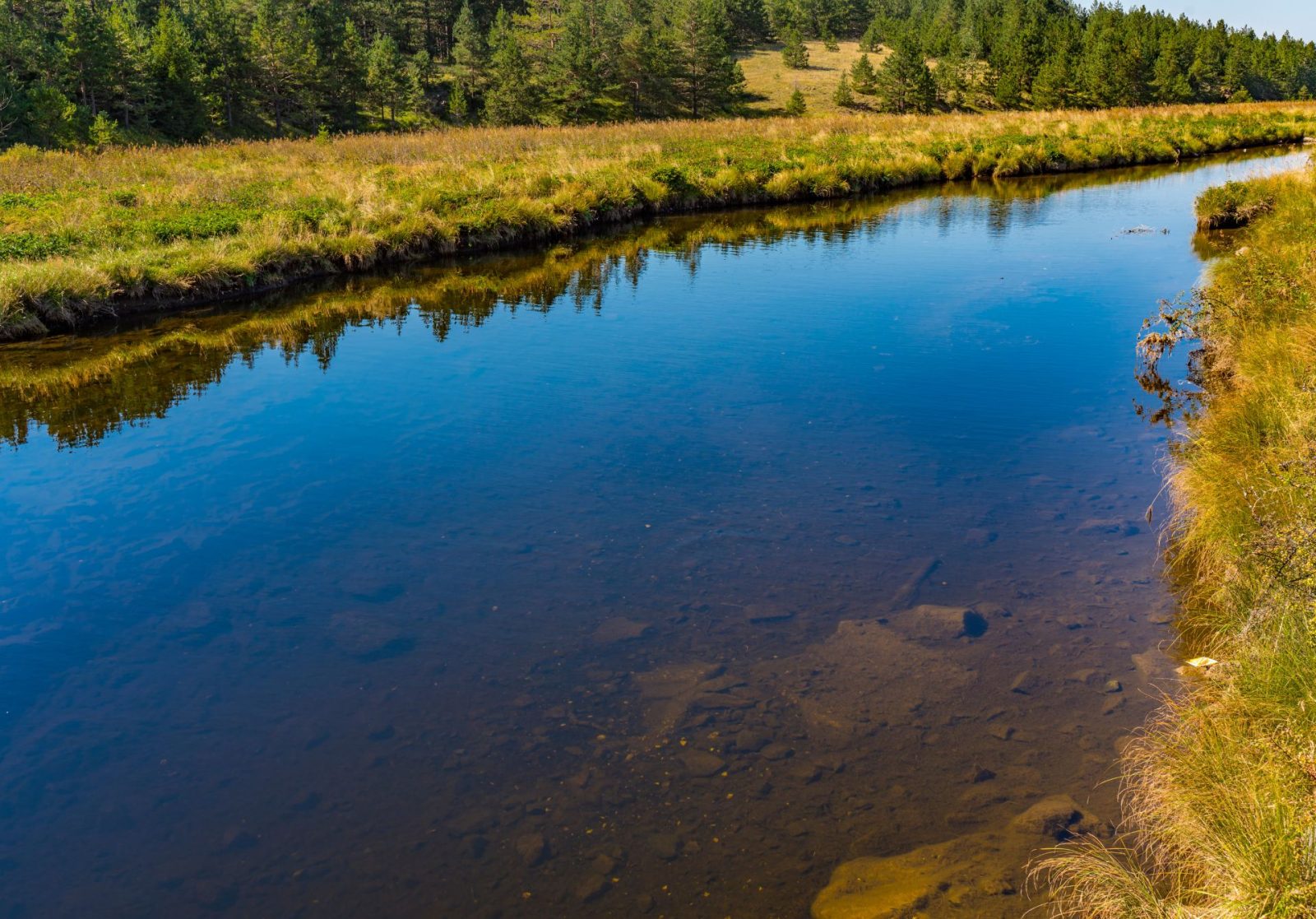
The scenery along the Rzav and Crni Rzav corridors is the kind that ends up on postcards — and for very good reason. Picture towering white pines framing wide, flower-filled meadows, with the river meandering lazily between wooded hillsides. One of the most popular spots along the Crni Rzav, a hamlet called Vodice, is genuinely considered one of the most photographed corners of the entire Zlatibor region, frequently appearing on local tourism materials. It’s especially magical during the May Day holiday season, when locals and visitors gather here to celebrate amid music and nature.
Zlatibor itself sits at an average elevation of around 1,000 metres above sea level, which gives the whole area that cool, clean alpine atmosphere. The mountain is intersected by rivers, streams, and ravines at every turn, and the Rzav system is the largest and most consequential of all of them. The surrounding forests are lush with Scots pine, black pine, fir, spruce, beech, and linden — creating a landscape that feels genuinely wild even when you’re only a short drive from a well-equipped resort town.
Ribnica Lake: The Crni Rzav’s Most Beautiful Creation
One of the most tangible ways to experience the Crni Rzav is to visit Ribnica Lake — an artificial reservoir created in 1971 when the river was dammed at the village of Ribnica. Located about 8 kilometres from the Zlatibor tourist centre, on the road toward the Tornik ski centre, Ribnica is the largest lake on Zlatibor and is nothing short of spectacular.
The name translates simply as “Fish Lake,” which tells you everything you need to know about what to do here. Surrounded on all sides by dense coniferous forest, the lake sits in a quiet valley with dark bedrock beneath the water giving it a mysteriously deep, dark hue — yet the water itself is wonderfully clean and clear. This place has become a magnet for anglers and anyone who simply wants to sit quietly by the water with a view that demands nothing of them.
- Fishing: The lake holds an impressive eleven recorded fish species, including chub, trout, carp, tench, and catfish. A permit from the “Zlatibor” Fishing Area (managed by Srbijašume) is required for fishing.
- Photography: The contrast of the dark water against green pine forest is extraordinary at any time of year — especially misty autumn mornings.
- Nature walks: Quiet paths around the lake perimeter make for an easy, relaxing stroll suitable for all fitness levels.
- Access: Easily reached by car, or via the famous Gold Gondola from Zlatibor town (approximately 6 km from the centre).
Fishing the Rzav: An Angler’s Dream
Let’s be honest — if you’re a fishing enthusiast, the Rzav river system is practically a pilgrimage destination. The “Zlatibor” Fishing Area, officially managed by the state forestry company Srbijašume, encompasses the rivers Uvac, Rzav, Crni Rzav, Dobroselička, Ribnica, and Katušnica — a network of pristine mountain waterways teeming with fish.
The rivers and streams of Zlatibor are rich with some seriously sought-after species:
- Brown trout — the prized catch, found throughout the colder, faster-moving sections of the Crni Rzav
- Huchen (mladica) — one of Europe’s largest freshwater fish, occasionally encountered in the deeper Rzav stretches
- Grayling (lipljan) — beloved by fly-fishing enthusiasts for their fight and beauty
- Chub, gudgeon, common nase — widespread throughout the system and great for beginners
- Carp and catfish — particularly in Ribnica Lake
The combination of altitude, clean water, and well-preserved riparian habitat makes the Rzav system exceptional by any European standard. If you’re planning a fishing trip, make sure to sort your permit in advance through the official Zlatibor Nature Park channels — and consider visiting in spring or early autumn when water levels and temperatures are ideal.
Hiking Along the Rzav: Trails for Every Level
The Rzav canyon and the Crni Rzav valley are popular hiking destinations in their own right, and the broader Zlatibor region offers over 30 marked hiking trails that weave through the mountain in every direction. The terrain is generally gentle — Zlatibor is famously one of Serbia’s most accessible mountain regions — but there are more challenging routes if you want them.
Highlights for hikers who want to get close to the Rzav and its tributaries include:
- Rzav Canyon walk — a scenic route along the canyon walls, beloved for its dramatic river views and forested tranquility
- Vodice to Ribnica Lake — an easy, well-trodden path that follows the Crni Rzav through pine forests and meadows, perfect for families
- Stopića Cave loop from Vodice — a more challenging 16.5 km route (about 5.5 hours) that incorporates spectacular cave formations and river valley scenery
- Liska–Masnica loop from Jablanica — a moderate trail that traces the wider Rzav valley and offers sweeping views across the eastern Zlatibor border
Because Zlatibor’s plateau has a mild inclination, the river valley trails are also extremely popular with cyclists. Thousands of kilometres of cycling trails connect Zlatibor town to Mokra Gora, Sirogojno, and Čajetina — many of them running alongside or near the Rzav tributaries.
The Rzav in History: A River That Has Seen Everything
The Rzav isn’t just a pretty face — it carries the weight of real history. During the dramatic Second World War events of November 1941, Partisan forces under Josip Broz Tito were retreating across Zlatibor with six tonnes of national silver reserves hidden in 103 crates. Pursued by the German offensive, they were forced to scatter the crates across the meadows in the direction of the Rzav River — a wartime story so extraordinary that it still captivates historians and treasure hunters alike. A local phrase from the time, referenced by historians of the period, described the broader journey of Zlatibor tourism as going “from Rzav whirlpools to Olympic pools” — a vivid way of capturing how dramatically this region transformed from rugged wilderness to polished resort destination.
The Crni Rzav and Veliki Rzav also serve as natural boundaries of the Zlatibor Nature Park, established in 2017, which covers more than 41,000 hectares and includes four protected zones: Viogor, Black Rzav, Uvac Gorge, and Griža Gorge. The entire Rzav basin falls within the Black Sea drainage basin, eventually contributing water all the way to the Drina and beyond.
Planning Your Visit: Practical Tips
Getting to Zlatibor and the Rzav river area is straightforward. The mountain resort is about 220–225 km from Belgrade, with 155 km on excellent highway followed by a scenic regional road. By car, you’re looking at roughly 2.5 to 3 hours from the capital. There are also frequent bus connections from Belgrade and other major Serbian cities.
- Best time to visit the river: Spring (April–June) for turquoise snowmelt colours and lush greenery; autumn (September–October) for fishing and atmospheric misty mornings. Summer is peak resort season — busier but still beautiful.
- Fishing permits: Required and available through Srbijašume’s official Zlatibor Fishing Area. Plan ahead, especially for summer.
- Getting around: A car gives you the most flexibility for exploring the river valleys. The Gold Gondola from Zlatibor town is a handy (and spectacular) way to reach the Tornik/Ribnica area.
- Accommodation: Zlatibor town has everything from luxury hotels to cosy village cottages. For a more immersive river experience, look for accommodation in the Ribnica or Vodice area.
- Combine with nearby attractions: Gostilje Waterfall (20 m high, one of Serbia’s top ten), Stopića Cave, the Sirogojno Open-Air Village Museum, and the Uvac Canyon griffon vulture colony are all within easy reach.
The Bottom Line: Don’t Sleep on the Rzav
Zlatibor is Serbia’s most popular mountain resort — and it has been drawing visitors since King Aleksandar Obrenović made it fashionable back in 1893. But most tourists stick to the lake in the town centre, the ski slopes at Tornik, and the main strip of restaurants and hotels. The Rzav River system — the Crni Rzav, Veliki Rzav, and the mighty Rzav itself — is the soul of this entire landscape, and it rewards anyone willing to step off the beaten path and follow the water.