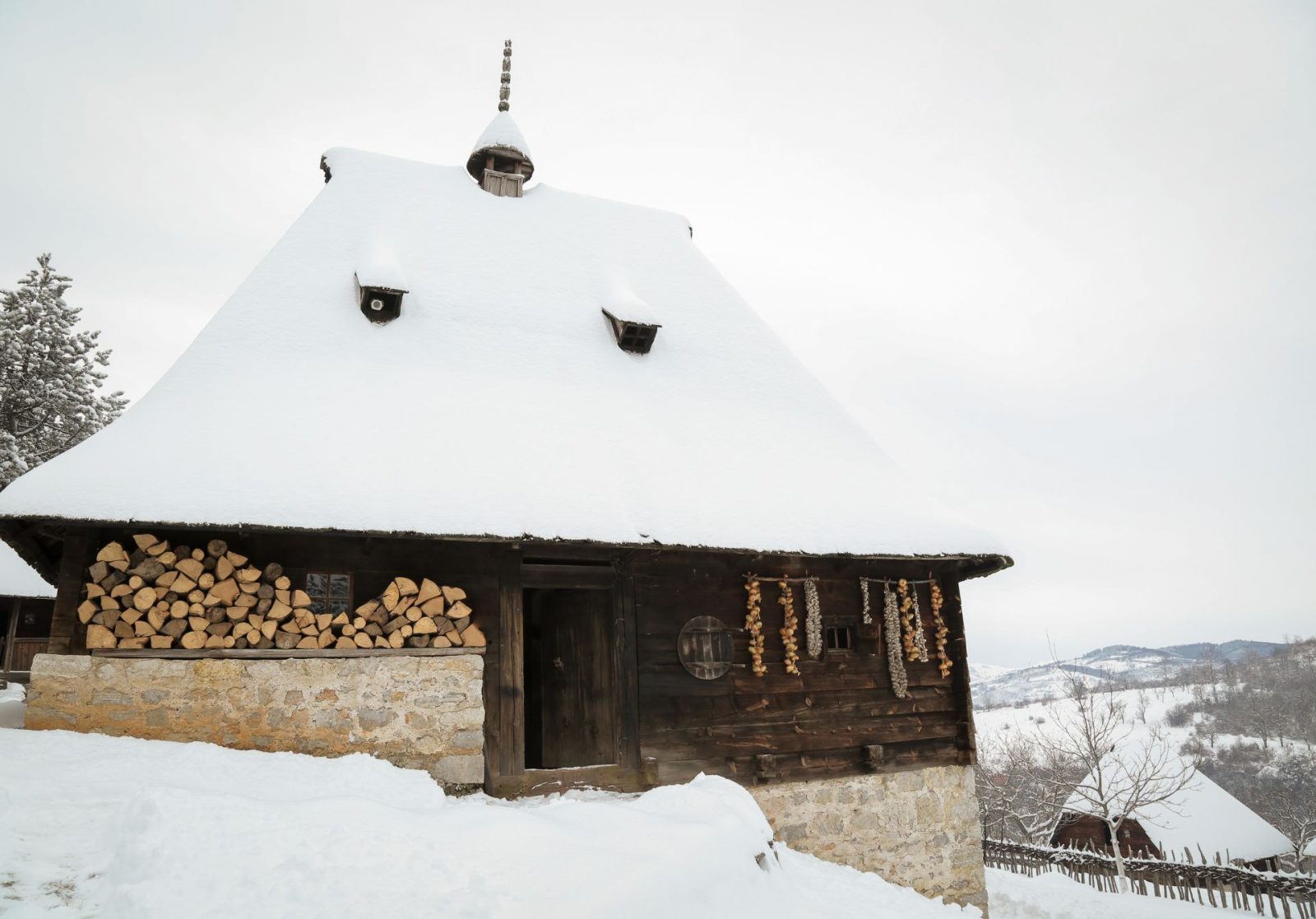
Tucked away on the slopes of Mount Zlatibor in western Serbia, roughly 23 kilometres from the main Zlatibor resort, lies one of the most enchanting and genuinely off-the-beaten-path cultural destinations in the entire Balkans. Sirogojno’s Old Village Museum — known locally as Muzej “Staro Selo” — isn’t just a museum. It’s a living, breathing time machine that pulls you straight into 19th-century rural Serbian life, and chances are it’ll be one of the most memorable stops on your entire trip.
Whether you’re a culture buff, a curious traveller, a family with kids, or someone who simply appreciates authentic experiences over tourist traps, Sirogojno delivers in spades. Read on — we’re going to walk you through everything you need to know before you visit.
A Bit of History: How It All Came Together
The story of the Old Village Museum is a fascinating one that blends community spirit, cultural pride, and serious dedication to preservation. The roots of the project stretch back to 1980, when architect Ranko Findrik, working alongside the Republic Institute for the Protection of Cultural Monuments, began the painstaking process of relocating and reconstructing authentic log cabins and traditional structures from the surrounding Zlatibor villages.
What makes this origin story even more compelling is who drove it. The initiative was rooted in the local organization of women knitters from Sirogojno — a group of mountain women whose hand-crafted wool sweaters had, incredibly, already begun conquering international fashion runways. The museum was their way of grounding their global success in something deeply local and irreplaceable.
By 1992, the museum became an independent institution. A year earlier, in 1983, the entire village of Sirogojno had been declared a Monument of Culture of Exceptional Importance under the protection of the Republic of Serbia — a designation that speaks volumes about how seriously Serbia takes this place. Today it stands as the only open-air museum of its kind in the entire country.
What You’ll Actually See: A Walk Through the Grounds
The museum spreads across roughly 5 hectares (with the broader complex extending even further) and contains approximately 50 authentic structures — all of them physically relocated, log by log, from actual Zlatibor villages. These aren’t replicas. These are the real deal.
The permanent exhibition is centred around two complete Zlatibor households representing rural family life in the second half of the 19th and early 20th century. Here’s a taste of what you’ll encounter as you wander the grounds:
- Traditional log houses — Built from hewn timber beams stacked horizontally, set on stone foundations, with steep shingle or straw-covered roofs. Watch out for the distinctive conical chimney called a kapić — it’s an architectural signature of the Zlatibor region.
- A cattleman’s complex — A complete shepherd’s settlement, including mobile log cabins called kućer, sheepfolds, and pens — a nod to the seasonal mountain grazing lifestyle that defined this region for centuries.
- Working farm structures — Stables, pig sties, a sheep enclosure, and structures used for curing plums and distilling rakija (the beloved Serbian brandy) round out the agricultural picture.
- Craft workshops — A blacksmith’s workshop, a cooper’s workshop, a bakery, a dairy, and a potter’s space give you an incredible sense of just how self-sufficient these mountain communities were.
- A village tavern (kafana) — Yes, there’s a traditional inn on site. We’ll get to the food in a moment.
In total, the permanent exhibition features 32 buildings out of roughly 55 across the entire site. The architecture is particularly remarkable — the Zlatibor log cabin is considered the most refined example of traditional Serbian housing within the entire Dinaric Mountain range. Walking among these structures, especially in autumn when the surrounding forest blazes with colour, is genuinely breathtaking.
The Knitters’ Museum: A Story That Went Global
You simply cannot visit Sirogojno without understanding the legend of the Sirogojno knitters. It’s one of those extraordinary local-to-global stories that sounds almost too good to be true.
It all started in 1962 when the local agricultural cooperative established a women’s handicraft workshop to preserve the tradition of wool processing. By the late 1960s, international interest had begun to grow. By the 1980s — the golden era — the women of Sirogojno were exporting 80,000 sweaters a year to markets in Sweden, Italy, France, Germany, the United States, and Japan.
The designer behind the international breakthrough was Dobrila Vasiljevic-Smiljanic, whose work earned Sirogojno the Italian Fashion Designer’s Guild’s prestigious AMMA Award in 1977. The accolades kept coming — Golden Peacock (1972), Golden Hind Awards at the Belgrade Fashion Fair (1983 and 1984). Even the legendary Pierre Cardin came calling, requesting 30 pieces urgently for his collection. The partnership never happened — because the Sirogojno women refused to let him put his name on their work. That’s a power move if we’ve ever heard one.
The client list reads like a who’s who of 20th-century celebrity: Nancy Reagan, Barbara Bush, Raisa Gorbachev, Queen Elizabeth, and actress Liv Ullmann — who was a regular customer at New York’s Fifth Avenue — all owned pieces from Sirogojno.
To honour these remarkable women, the Knitters’ Museum was opened in 2008. It houses authentic recordings of fashion shows, photographs, newspaper clippings, personal letters, and a moving archive of just how far this tiny mountain village reached. Don’t skip it.
Food Worth the Drive Alone
The museum’s traditional tavern serves what Serbians call srpska trpeza — a spread of mountain staples prepared the old-fashioned way. Think kaymak (a rich, creamy dairy product), Zlatibor cheese, smoked ham, buckwheat pie, spinach moussaka, and lamb prepared under the sač (a traditional cast-iron bell). Lunch is sometimes served outdoors on the grass, eaten from ceramic dishes with wooden spoons. It’s theatrical, rustic, and absolutely delicious.
For drinks, the museum shop offers 100% natural fruit juices made from raspberries, blueberries, blackberries, and pears sourced directly from the Zlatibor region — a refreshing and entirely guilt-free treat.
Shopping for Souvenirs That Actually Mean Something
The on-site shop is one of the better places in Serbia to pick up authentic, locally made goods. Look out for:
- Hand-knitted wool sweaters, scarves, gloves, and socks made by local artisans
- Traditional pottery and woven rugs
- Dried fruits — raspberries, cherries, blackberries — from the Sirogojno Company (Serbia’s largest exporter of wild fruit products)
- Homemade jams, jellies, and rakija
- Wooden items and other handmade crafts
Staying Overnight: A Genuinely Special Option
Here’s something most visitors don’t know: you can actually sleep inside the museum. Several authentic wooden chalets have been adapted for guests, typically offering one or two bedrooms, a bathroom, and in some cases a kitchen, dining room, fireplace, and porch. Waking up surrounded by 19th-century log cabins with mountain forest on all sides? That’s a travel memory you’ll be telling people about for years. Book in advance at sirogojno.org.rs.
Things to Do Beyond the Museum
Sirogojno isn’t just about the museum — the surrounding area is full of reasons to linger longer. Some highlights:
- The Church of St. Peter and Paul — Built in 1721 (reconstructed in 1821), this Serbian Orthodox church is a beauty and still in active use. Its carved doors and 19th-century icons are well worth a look.
- Summer workshops — With prior arrangement, the museum hosts traditional craft workshops including pottery, knitting, weaving, mosaic-making, and painting. Perfect for families or anyone who likes getting their hands dirty in the most culturally enriching way possible.
- Knitting fashion shows — Sirogojno Style still stages knitwear fashion shows for groups by prior arrangement. Quirky? Absolutely. Wonderful? Completely.
- Mountain biking and hiking — The road between Zlatibor and Sirogojno is asphalt, relatively quiet, and passes through gorgeous landscape. Electric bikes are especially recommended.
- Exploring Zlatibor — Sirogojno makes an excellent base or day-trip stop when exploring the wider Zlatibor mountain region, which is the most visited tourist area in western Serbia.
Getting There: Practical Tips
Sirogojno sits about 23–25 kilometres from the centre of Zlatibor and is most easily reached by car. There are two main routes:
- From Užice: Take the main road towards Zlatibor, then turn onto the local road towards Rožanstvo and Sirogojno at the village of Mačkat.
- From Zlatibor centre: Follow the road through the villages — scenic, winding, and genuinely lovely.
There is a large parking lot at the museum entrance. The site is best visited in spring through autumn — summer for the lush greenery and cultural events, autumn for the spectacular foliage. Winter visits are possible but movement around the grounds can be challenging.
Why Sirogojno Deserves a Spot on Every Serbia Itinerary
In an age where so many tourist attractions have been polished, packaged, and drained of authenticity, the Old Village Museum of Sirogojno stands apart. This is a place where the preservation is genuine, the craftsmanship is real, and the story — from shepherd’s log cabin to Queen Elizabeth’s wardrobe — is genuinely extraordinary.
It earned recognition from the Europa Nostra Awards and the European Union in 2012 for its ongoing cultural heritage project, and it continues to attract tens of thousands of visitors every year. It is, without question, one of the most important and moving cultural sites in Serbia.
So whether you’re planning a long weekend in Zlatibor or a broader Balkan road trip, carve out a few hours — or better yet, a full day and a night — for Sirogojno. Walk among the log cabins. Taste the kaymak. Buy a hand-knitted sweater with a pattern that looks like a Zlatibor meadow. And raise a glass of homemade rakija to the remarkable women who turned a remote mountain village into a world-famous name. You won’t regret it.